Chapter 2.5 follows chapter 2.4, The maintenance prompt and its versions, and precedes chapter 2.6, The token ledger and the timing record, within part 2, the harness.
The harness, meaning an ordered set of checks that protects a work cell, uses ordered checks before a cell can start and while its work is recorded. The admission gate controls entry. The fingerprint, meaning a record used to compare the workspace with the frozen build, protects the boundary around that tree. A lint, meaning a scan for a required or forbidden condition, checks the brief and the scoring material. Later guards check task absence and transcript contamination before publication. Each guard answers a failure exposed by an incident. source: 5. Experiment/1. Harness/scripts/ directory listing on 2026-09-12
2.5.1 Admission gate of the measurement harness
The admission gate runs the hidden checks against the starting tree. It refuses a cell when the feature is already present, because that cell would measure an agent reading a finished implementation. It also refuses a cell when no runnable scorer is available. This check moved the incident of feature cells staged with the feature already built into a refusal before agent work begins. The same guard carries the staging failure record for a starting tree that passes hidden checks.
Figure D-H4-1. The guards of the harness, the program behind each, and the incident that produced it
%% figure D-H4-1
flowchart TB
  subgraph admission["Admission gate"]
  n1_1["run_cell.py"] --> n1_2["run_staging_gate()"]
  n1_2 --> n1_3["parent_repo_fingerprint()"]
  n1_3 --> n1_4["lint_task_briefs.py"]
  end
  subgraph checks["Checks"]
  n2_1["decontaminate_briefs.py"] --> n2_2["lint_hidden_scorers.py"]
  n2_2 --> n2_3["scoring_contract.json"]
  n2_3 --> n2_4["hidden_scorer_missing"]
  n3_1["verify_task_absence.py"] --> n3_2["run_checks()"]
  n3_2 --> n3_3["classify()"]
  n3_3 --> n3_4["audit_transcripts.py"]
  n4_1["publish_lock.py"] --> n4_2["publish_lock()"]
  n4_2 --> n4_3["preflight_batch.py"]
  n1_4 --> n2_1
  n2_4 --> n3_1
  n3_4 --> n4_1
  end
source: operations/site-ia/A3-diagram-specification.md
source: 5. Experiment/1. Harness/scripts/ directory listing on 2026-09-12
The guards in the order a cell meets them.
2.5.2 Repository fingerprint of the measurement harness
The repository fingerprint compares the staged workspace with the frozen build and watches the boundary around it. It catches material from the research repository entering the workspace and material from the workspace entering the research repository. The check also limits access to hidden checks and experiment configuration.
The motivating isolation incident was the discovery that documented-arm cells had read their own hidden scoring assets. The fingerprint is one response: it makes the workspace boundary observable before and after agent work. The verification script writes its records outside the guarded workspace so that the check does not alter the cell it measures.
2.5.3 Brief lint, a check that removes study disclosures of the measurement harness
The brief lint, meaning a check that removes study disclosures, statements about the study that could affect an agent, from task briefs and active prompt templates, keeps treatment information, harness information, and hidden-tier information out of the agent brief. The incident that motivated it was the copying of study disclosures into a prompt. A disclosure could change agent behaviour and contaminate the comparison. The lint runs before launch and again before measured work.
2.5.4 Scorer lint of the measurement harness
The scorer lint checks that every task has executable hidden scoring material. It blocks a cell that would have no way to produce a pass or fail result. The incident record includes scorer names that had never existed. The corpus guard for that failure is described in the task applicability account. The scorer lint keeps a missing scorer from becoming an unmeasurable cell. source: 5. Experiment/1. Harness/scripts/ directory listing on 2026-09-12
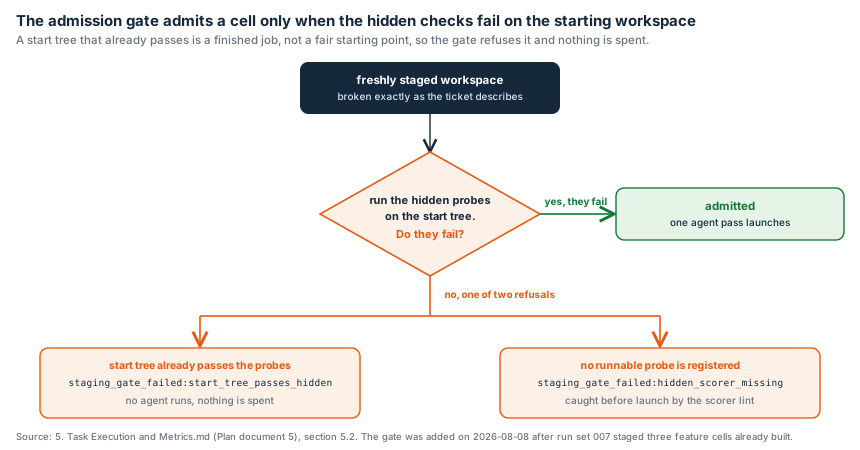 The admission gate and its refusal conditions.
2.5.5 Task absence check of the measurement harness
The task absence check runs the hidden checks against the untouched starting builds. It confirms that the requested feature is absent before an agent starts and that the checks recognise a valid implementation. This guard carries forward the task-absence guard from the maintenance prompt. It closes the failure exposed when a staged feature was already built, so a cell cannot claim work on a task that required no work.
2.5.6 Transcript audit of the measurement harness
The transcript audit scans the agent transcript for references to hidden checks, study treatment, or the experiment. It marks a transcript as contaminated when the record shows access to hidden material. The motivating incident was the group of documented-arm cells that read their own hidden scoring assets. Their transcripts and work records require an audit trail that can exclude contaminated observations from publication.
2.5.7 Publish lock of the measurement harness
The publish lock serialises scoring and filing for a cell. It prevents duplicate publication when more than one process reaches the recording step. The incident it addresses is a duplicate record or race at publication. The lock remains held through scoring and filing, then releases the cell to the ledger.
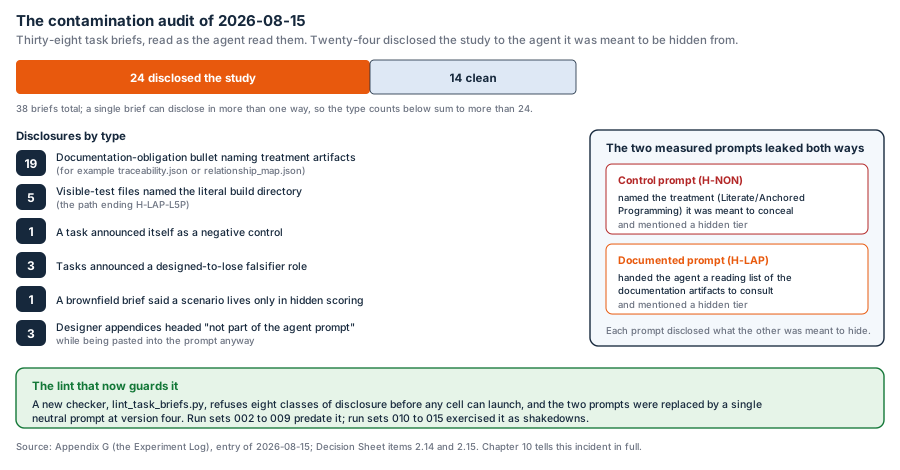 The transcript audit and the publication boundary.
2.5.8 Supporting guard programs of the measurement harness
The scripts directory contains ten guard programs. The folder listing names verify_task_absence.py, materialize_feature_bases.py, lint_task_briefs.py, lint_hidden_scorers.py, lint_retry_feedback.py, lint_task_literals.py, decontaminate_briefs.py, audit_transcripts.py, publish_lock.py, and preflight_batch.py.
source: 5. Experiment/1. Harness/scripts/ directory listing on 2026-09-12
The materialisation guard keeps feature bases in the intended staged state. The retry-feedback and task-literal lints keep prompt content within its allowed boundary. The decontamination guard removes study disclosures from briefs. The preflight guard checks the batch before launch. The cell runner supplies the staging gate. The harness documentation and isolation contract record the surrounding admission and boundary rules. source: 5. Experiment/1. Harness/scripts/ directory listing on 2026-09-12
2.5.9 Isolation incident of the measurement harness
The nine documented-arm cells that read their own hidden scoring assets on 2026-07-28 violated the isolation contract. The repository fingerprint, brief lint, transcript audit, and publication controls address different points in that failure path. The incident source records the amendment that required these controls. source: 5. Experiment/0. Plan/Appendix A, Chronology of Design Amendments.md line 57